Oakland Park FL Personal Injury Lawyers
An accident can leave you trying to manage medical appointments, missed work, insurance calls, and a growing stack of bills—all while you are still figuring out what happened.
The first steps matter. So does understanding who may be responsible, where evidence may be found, and whether the location of the accident changes the rules that apply.
Drazen Mancini, P.A. represents people injured in vehicle crashes, falls, dangerous property incidents, and other preventable accidents. If you were hurt in Oakland Park FL, the firm can investigate what happened, deal with the insurance companies, and explain your options in plain English.
Legal Help That Does Not Feel Impersonal
A serious injury case needs careful preparation, but clients also need a lawyer who will return calls, answer questions, and keep them informed.
Partners Dan Drazen and Eugenio Mancini focus their work on representing injured people. Eugenio has handled thousands of pre-litigation matters and hundreds of litigated cases involving motor vehicle collisions and falls. He serves clients in English and Spanish. Dan’s experience includes vehicle and trucking collisions, dangerous-property cases, dog bites, and nursing home abuse matters.
That background can be especially useful when fault is contested. The firm’s published case results include recoveries in a disputed-liability vehicle accident, a rear-end collision, and a bicycle injury caused by a roadway pothole.
Your first conversation is a chance to tell the firm what happened and ask questions. The consultation is free.
Why Oakland Park FL Injury Cases Require Local Investigation
Oakland Park sits within a transportation network controlled by several different public agencies.
I-95 meets Oakland Park Boulevard at Exit 31, where the boulevard is designated State Road 816. Dixie Highway is State Road 811 through part of the city, while Federal Highway is part of the state road system. Other streets, sidewalks, drainage facilities, signs, and rights of way may be controlled by Oakland Park or Broward County.
That distinction matters if an accident involves:
- A pothole or broken pavement
- A malfunctioning traffic signal
- Poor drainage or standing water
- Missing or damaged signs
- A dangerous sidewalk
- Road construction
- Inadequate lighting
- Overgrown vegetation blocking a driver’s view
Oakland Park’s Public Works Department maintains city roadways, sidewalks, rights of way, and stormwater facilities. Broward County Traffic Engineering handles certain signals, signs, and traffic-control responsibilities, while FDOT may control conditions on state roads.
The agency that received complaints, ordered repairs, inspected the location, or hired a contractor may have important records. Identifying that agency early can affect both the evidence and the deadlines.
Questions about an injury in Oakland Park?
Drazen Mancini, P.A. offers a free consultation so you can ask questions before deciding what to do.
A Broward County Accident Snapshot
According to the Florida Department of Highway Safety and Motor Vehicles’ 2023 Traffic Crash Facts report, Broward County recorded:
- 40,304 traffic crashes
- 24,540 injuries
- 1,114 pedestrian crashes
- 890 bicyclist crashes
- 763 motorcycle crashes
Those numbers reflect the larger county, but they show the range of serious collisions that can affect people traveling through Oakland Park. They also underscore why an investigation may need to look beyond the police report—to vehicle data, surveillance footage, roadway records, witness accounts, and insurance coverage.
Where Injuries Commonly Happen in Oakland Park FL
Major roads and intersections
Crashes around Oakland Park Boulevard, I-95, Dixie Highway, Federal Highway, Andrews Avenue, and Commercial Boulevard can involve high traffic volumes, frequent lane changes, turning vehicles, and drivers entering or leaving businesses.
At a busy intersection, evidence may include traffic-signal timing, nearby business video, vehicle event data, photographs of lane markings, and testimony from drivers who were stopped nearby.
Sidewalks, crossings, and bicycle routes
Pedestrian and bicycle cases often turn on visibility. A driver may claim the person was outside a crosswalk or difficult to see. The injured person may point to speeding, an unsafe turn, blocked sightlines, poor lighting, or a failure to yield.
Photos should document more than the point of impact. The approach to the crossing, nearby signs, vegetation, lighting, curb ramps, parked vehicles, and road design may all matter.
Stores, restaurants, and commercial properties
Falls can happen in aisles, entrances, parking lots, walkways, and stairwells. The central question is often not simply whether a hazard existed. It is whether the business or property operator knew—or should have known—about it.
Surveillance video, inspection routines, cleaning records, prior complaints, repair requests, and employee testimony can help answer that question.
Construction and drainage areas
Road, sidewalk, utility, and drainage work can create temporary hazards. Barricades move. Pavement is patched. Standing water drains away. Contractors remove equipment.
A prompt investigation can establish what the area looked like when the accident happened and determine whether the city, county, state, utility company, property owner, or contractor controlled the work.
Personal Injury Cases Drazen Mancini, P.A. Handles
The firm represents clients in matters involving:
- Car and other auto accidents
- Truck accidents
- Motorcycle accidents
- Uber, Lyft, and other rideshare accidents
- Pedestrian and bicycle collisions
- Premises liability
- Slip and fall accidents
- Trip and fall accidents
- Big-box retailer accidents
- Commercial property accidents
- Dog bites
- Wrongful death
What to Do After an Accident
Your health comes first. If you are in immediate danger or may have a serious injury, call 911.
After that, take the following steps when you reasonably can:
- Get medical care. Some injuries become more noticeable after the initial shock wears off. Tell the medical provider how the accident happened and describe every symptom accurately.
- Report the accident. Call law enforcement after a traffic collision. Report a property accident to the manager, owner, or security staff and ask that a written incident report be created.
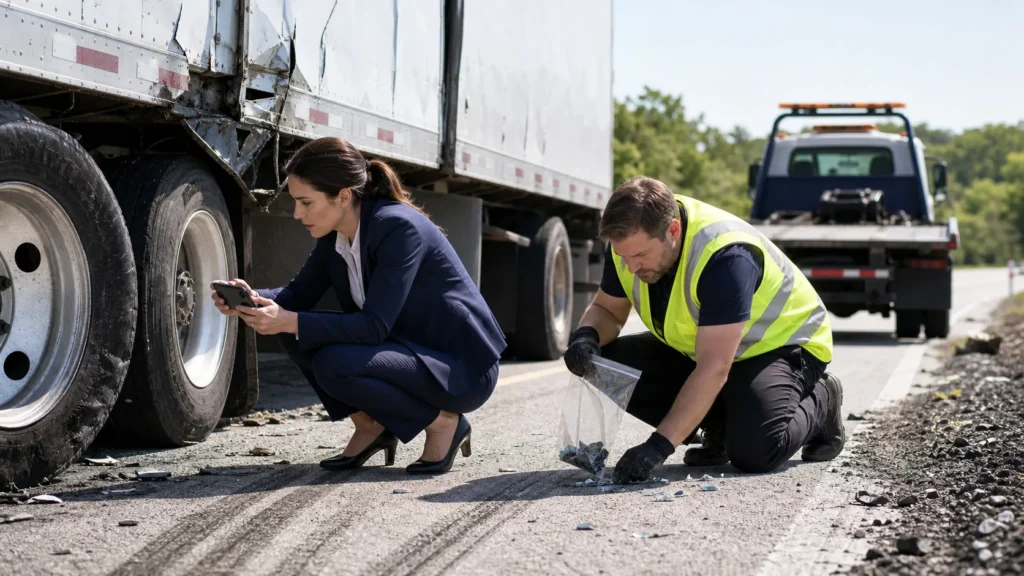
- Photograph the scene. Take wide and close-up photographs of vehicles, damage, injuries, road conditions, liquid, debris, lighting, signs, stairs, sidewalks, or anything else that may have contributed.
- Collect names and contact information. Do not assume a witness’s name will appear in a police or store report.
- Save damaged property. Keep torn clothing, shoes, helmets, child safety seats, bicycle components, and other physical evidence.
- Be careful with insurance calls. You may need to report the accident, but you do not have to guess about facts or minimize symptoms. Do not sign a release before understanding what rights it gives up.
- Keep a record of your losses. Save medical bills, prescription receipts, wage records, repair estimates, mileage logs, and correspondence from insurers.
For crashes investigated in Oakland Park, police services are provided by the Broward Sheriff’s Office Oakland Park District. BSO reports may be requested through its records portal.
Evidence Worth Preserving
Evidence can disappear long before the deadline for filing a lawsuit.
Depending on the case, an attorney may need to preserve or obtain:
- Police crash reports and body-camera footage
- 911 recordings and dispatch records
- Business surveillance video
- Dashcam or doorbell-camera recordings
- Vehicle event data
- Electronic driver logs from commercial trucks
- Rideshare trip and app records
- Witness statements
- Store incident reports
- Cleaning and inspection logs
- Lease and property-management agreements
- Maintenance and repair records
- Prior complaints about the same hazard
- Road ownership and jurisdiction records
- Construction contracts, permits, and traffic-control plans
- Medical records and diagnostic imaging
- Employment and wage documentation
A preservation letter can put a business, trucking company, property owner, or government agency on notice that relevant material should not be erased or destroyed.
Florida Laws and Deadlines
The general filing deadline
Under Florida Statutes section 95.11, most current negligence lawsuits must be filed within two years. Florida also generally applies a two-year period to wrongful death actions.
The exact deadline can depend on when the claim arose, the defendant’s identity, and the legal theory involved. Waiting until the end of the filing period can also make a case harder to prove, even if it is still legally timely.
Florida’s 14-day PIP rule
After a motor vehicle accident, Florida Statutes section 627.736 generally requires qualifying initial medical care within 14 days for Personal Injury Protection medical benefits.
PIP generally pays 80% of reasonable and medically necessary covered expenses, subject to statutory and policy limits. The type of provider, the medical findings, and whether an emergency medical condition is established can affect the available benefit.
The serious-injury threshold in vehicle cases
PIP does not necessarily prevent you from bringing a claim against an at-fault driver. However, recovering damages for pain, suffering, mental anguish, and inconvenience generally requires an injury meeting the threshold in Florida Statutes section 627.737.
Qualifying injuries may include permanent injury, significant and permanent loss of an important bodily function, significant permanent scarring or disfigurement, or death.
Slip-and-fall notice requirements
If you slipped on a spill or another temporary substance in a business, Florida Statutes section 768.0755 requires proof that the business had actual or constructive knowledge of the condition.
Constructive knowledge may be shown by evidence that the hazard existed long enough that the business should have discovered it or that the condition happened regularly and was foreseeable. Video, inspection records, footprints, track marks, employee observations, and prior incidents may become important.
What If You Are Partly at Fault?
Florida uses a modified comparative-fault system.
Under Florida Statutes section 768.81, a person who is more than 50% responsible for their own harm generally cannot recover damages in a negligence action. If the injured person is 50% or less at fault, compensation may be reduced by that person’s percentage of responsibility.
Insurance companies may use this rule to argue that:
- A driver was speeding or distracted
- A pedestrian crossed outside the designated area
- A bicyclist was difficult to see
- A customer should have noticed a floor hazard
- A person was wearing unsafe footwear
- The injured person waited too long to seek treatment
Those arguments are not automatically correct. They must be compared with the physical evidence, witness testimony, applicable safety rules, and the conduct of everyone involved.
Get clear answers about fault, insurance, and next steps.
Talk through your options with Drazen Mancini, P.A..
Who May Be Responsible?
The answer depends on how the injury happened.
In a traffic case, potentially responsible parties may include the driver, vehicle owner, employer, trucking company, maintenance contractor, cargo loader, vehicle manufacturer, or rideshare insurer.
In a property case, responsibility may rest with the owner, tenant, property manager, maintenance company, security contractor, or construction company. A lease may show that one company controlled the interior while another maintained the parking lot and sidewalk.
If the injury involved a road or public property, Oakland Park, Broward County, FDOT, BSO, or a government contractor may need to be considered. The name on the police report does not necessarily identify the entity responsible for maintaining the accident location.
Compensation After a Serious Injury
A personal injury claim may seek compensation for losses such as:
- Emergency treatment and hospital care
- Surgery, therapy, and rehabilitation
- Future medical needs
- Lost wages
- Reduced earning ability
- Pain and suffering
- Disability or loss of mobility
- Scarring and disfigurement
- Damage to a vehicle, bicycle, or other property
The value of a case depends on more than the amount of the first medical bill. Attorneys also look at the expected course of treatment, whether the injury will affect future employment, available insurance, disputed fault, and how the injury has changed daily life.
When a Government Agency May Be Involved
Claims against government entities have additional procedural requirements.
Under Florida Statutes section 768.28, written notice generally must be presented to the appropriate government agency within three years. A wrongful death claim has a shorter two-year notice period. Claims involving a state agency such as FDOT may also require notice to the Florida Department of Financial Services.
A lawsuit usually cannot begin until the claim is denied or the statutory review period passes. Florida law also places limits on what government entities ordinarily may be required to pay without additional insurance coverage or legislative action.
These rules make early identification of the responsible agency especially important. A road that appears to be an Oakland Park street may actually be controlled by Broward County or the state.
Local Courts, Medical Facilities, and Agencies
Personal injury lawsuits filed in Broward County may be handled through the Seventeenth Judicial Circuit. The Broward County Central Courthouse is located at 201 SE 6th Street in Fort Lauderdale FL. Circuit Civil is in the West Building. The proper court depends on the amount in dispute, the defendants, and other jurisdictional considerations.
Nearby emergency-care options include:
- Broward Health Imperial Point, 6401 N Federal Highway in Fort Lauderdale FL
- Holy Cross Health Emergency Department, 4725 N Federal Highway in Fort Lauderdale FL
- Broward Health Medical Center, a Level I adult and pediatric trauma center at 1600 S Andrews Avenue in Fort Lauderdale FL
Medical decisions should be based on your symptoms and the guidance of emergency personnel—not on which facility may later appear in a claim.
Other potentially relevant agencies include the Broward Sheriff’s Office, Oakland Park Public Works, Broward County Traffic Engineering, and FDOT District Four.
How Drazen Mancini, P.A. Investigates a Case
A thorough investigation begins with the details: exactly where the accident happened, who controlled the location, what changed afterward, and where records are likely to exist.
Depending on the case, the firm may:
- Visit and photograph the accident scene
- Determine who owned or maintained the property
- Send evidence-preservation notices
- Obtain reports, video, and public records
- Interview witnesses
- Review insurance policies and coverage
- Examine vehicle, trucking, or rideshare records
- Analyze medical documentation
- Consult appropriate experts
- Calculate current and future losses
- Negotiate with insurers
- File suit when litigation becomes necessary
The goal is to build the case before evidence disappears and before an insurance company’s version of the accident becomes the only version in the file.
Frequently Asked Questions
How do I know whether I have a personal injury case?
A claim generally requires evidence that another person, business, or agency failed to use reasonable care and that this failure caused your injury. The best way to evaluate the claim is to review the facts, evidence, injuries, and available insurance together.
What if I did not feel hurt immediately?
Delayed symptoms are common after crashes and falls. Seek appropriate medical care and explain when the symptoms began. After a motor vehicle accident, remember that Florida’s PIP law generally requires qualifying initial care within 14 days.
Should I give the insurance company a recorded statement?
You may have cooperation duties under your own policy, but recorded statements can affect a claim. Before answering detailed questions, make sure you understand who the adjuster represents and why the statement is being requested.
Who pays my medical bills after a car accident?
Florida PIP coverage may pay part of covered medical expenses first. Depending on the circumstances, additional compensation may come from the at-fault party’s liability coverage, uninsured or underinsured motorist coverage, health insurance, or another responsible business or agency.
Will my case go to trial?
Many claims resolve without trial, but settlement depends on whether liability, injuries, and damages can be resolved fairly. Preparing a case as though it may be litigated can put the client in a stronger position during negotiations.
Can the firm help me in Spanish?
Yes. Eugenio Mancini serves clients in both English and Spanish.
What happens when I contact the firm?
The team will ask what happened, where and when the accident occurred, what medical care you received, and which insurers have contacted you. You will have an opportunity to ask questions and learn what the next steps may involve.
Related Information
- Meet the Drazen Mancini, P.A. legal team
- Review the firm’s case results
- Read the firm’s personal injury resources
- Contact Drazen Mancini, P.A.
Tell Us What Happened
If you were injured in Oakland Park FL, you do not have to sort through the medical, insurance, and legal questions alone.
Tell Drazen Mancini, P.A. what happened. The firm will listen, review the available facts, and explain your options.
Call 561-783-4534 or request a free consultation.
Broward County Areas Served
Personal Injury
Car Accidents
Talk with Drazen Mancini, P.A.
Call 561.783.4534 or request a free consultation.
Sources
- Drazen Mancini, P.A. official website
- Drazen Mancini, P.A. team
- Dan Drazen attorney profile
- Eugenio Mancini attorney profile
- Drazen Mancini, P.A. case results
- 2023 Florida Traffic Crash Facts
- Florida Statutes section 95.11—limitations of actions
- Florida Statutes section 627.736—Personal Injury Protection benefits
- Florida Statutes section 627.737—motor vehicle injury threshold
- Florida Statutes section 768.0755—transitory foreign substances
- Florida Statutes section 768.81—comparative fault
- Florida Statutes section 768.28—government tort claims
- Oakland Park Public Works
- Oakland Park police services and BSO records
- FDOT I-95 exit information
- Broward County courthouse hours and locations
- Seventeenth Judicial Circuit court locations
- Broward Health locations
- Broward Health emergency and trauma care
- Holy Cross Health emergency care