What to Expect After Rear-Ending Another Vehicle
What to Expect After Rear-Ending Another Vehicle
Most people assume that rear-ending another vehicle automatically settles every question about fault. That belief is understandable. The driver who made contact from behind may feel pressure to explain what happened right away, especially when an insurer, police officer, or another driver asks for details.
The honest answer is narrower. Rear impact often creates an initial assumption, but it is only the starting point. We encourage a careful record of what happened before, during, and after the crash, because the facts, evidence, and timeline may matter more than a brief first description.
A Rear Impact Is Not the Whole Story
When one vehicle strikes another from behind, insurers may initially look at whether the following driver was too close, distracted, speeding, or unable to stop in time. Those are reasonable questions. They are not always the only questions.
The harder question is what happened in the seconds before the impact. Traffic may have stopped suddenly. A vehicle may have moved into a lane moments before the crash. Another collision may have pushed a vehicle forward. A road hazard, brake-light issue, mechanical concern, or sudden congestion may also become part of the review.
None of those facts automatically changes the outcome. They may simply require closer review.
A rear-end collision attorney may examine the larger factual record rather than relying only on the point of impact. At our firm, we often see that the first explanation is not always the complete explanation. Our areas of practice reflect the fact that injury matters can involve many different circumstances and records.
The Details That May Change the First Impression
Vehicle position and traffic movement can shape how a collision is understood. A clear timeline may answer questions that are difficult to resolve later, after memories have changed.
Relevant details may include:
- Whether traffic was stopped, slowing, or moving normally
- Whether the lead vehicle had recently changed lanes
- Whether a chain-reaction crash was involved
- Whether the following driver had time and distance to react
- Whether another vehicle, object, or road condition affected traffic
Florida road conditions can also complicate the sequence. Wet pavement, bright sun glare, construction patterns, debris, and unexpected backups may affect visibility and stopping distance. What should not be assumed is that these conditions answer the fault question by themselves. The evidence still matters.
Vehicle condition can matter as well. Brake performance, taillights, turn signals, cargo, and the location of damage may raise questions worth evaluating. A missing light or mechanical issue does not automatically establish responsibility. It may, however, help explain what investigators need to examine.
Preserve the Information That May Matter Later
The record matters because a rear-end crash is stressful, and memories can fade quickly. A written timeline made soon after the collision may help preserve the order of events, weather and traffic conditions, the time and location, and what each person said.
Useful information may include:
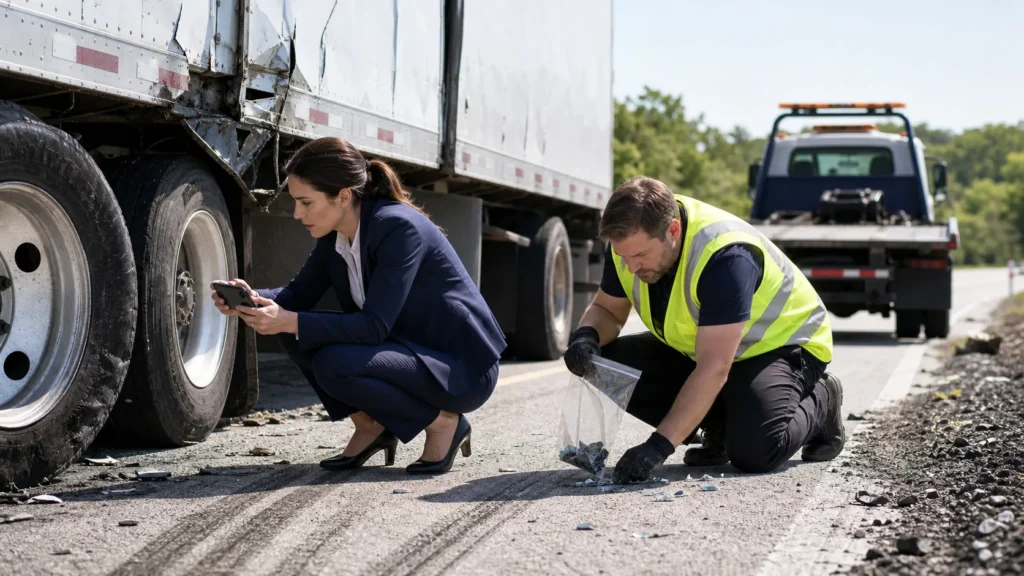
- Photos of vehicle positions, damage, debris, skid marks, and traffic controls
- Witness names and contact information
- Police or incident-report details and insurance communications
- Towing records, repair estimates, and photos taken before repairs
- Medical documentation, dash camera footage, vehicle data, or nearby camera footage when available
Physical evidence may not remain available for long. Vehicles are repaired, debris is cleared, and video may be overwritten. That does not mean the matter is lost. It means the available information should be organized carefully.
Some crashes also happen near businesses, parking areas, apartment complexes, or other private property. When a property condition or camera record may be relevant, those questions can overlap with issues addressed in our premises liability work.
How Insurance Review Commonly Unfolds
Insurance review often begins with basic information: crash descriptions, photographs, vehicle damage, repair information, reports, and statements from the people involved. As the review develops, insurers may request more records or ask for a recorded statement.
Accuracy matters. It is reasonable to provide information you know, but guessing about speed, distance, visibility, injuries, or another driver’s actions can create confusion. If part of the sequence is unclear, saying so is different from filling in a gap with an assumption.
Property damage and injury issues may also unfold on different timelines. A vehicle may appear to have limited damage while someone later reports pain or seeks medical care. That does not automatically establish that an injury was caused by the crash, and it does not allow the issue to be dismissed based on vehicle damage alone. The records, treatment history, and crash evidence may all require review.
Prepare for the Next Conversation
Panic does not improve the record. A more useful focus is accuracy, organization, and a clear account of what happened before impact. Keep documents together, preserve available photos and communications, and avoid treating an early assumption as the final answer.
When facts are disputed, injuries are reported, several vehicles are involved, or insurance questions remain unclear, the available records should be reviewed carefully and the sequence should not be reduced to an early assumption. The answer remains fact-specific.
This article is for general informational purposes only. It is not legal advice, medical advice, or a substitute for speaking with a qualified professional about a specific situation.
Get Clear Answers About Your Next Steps
At Drazen Mancini, P.A., we help people understand how auto accident claims are evaluated and what information may become important. Our rear-end collision attorney can review the circumstances with care and explain the questions the available records may raise. To discuss your situation, contact us for a consultation. This article is for general informational purposes only and is not legal advice.
FAQs
Does Rear-Ending Another Vehicle Automatically Mean I Am At Fault?
Rear impact often creates an initial assumption that the following driver may be responsible. The full answer can depend on traffic movement, vehicle positions, road conditions, witness accounts, video, and other available evidence.
What Should I Document After A Rear-End Crash?
Photos of the vehicles and roadway, insurance information, witness contact details, report information, towing and repair records, and a written account of events may help create a clearer record.
Should I Give The Insurance Company A Recorded Statement?
Insurers may request recorded statements as part of their review. Before giving one, it may help to understand the purpose of the request and avoid guessing about facts that remain unclear.
Can A Sudden Stop Affect A Rear-End Collision Claim?
A sudden stop may become part of the factual review, particularly when traffic conditions, lane changes, road hazards, or other events may have contributed to the crash. Whether it changes the analysis depends on the evidence.
When Should I Speak With A Rear-End Collision Attorney?
A rear-end collision attorney may be helpful when facts are disputed, injuries are involved, multiple vehicles were involved, insurance issues are uncertain, or questions remain about what evidence may matter.